





Mini-Split Repair
Ductless Mini-Split Repair in Bloomington, MN
Professional Ductless System Diagnosis & Repair
When your ductless mini-split system stops heating or cooling, you’re losing comfort in one or more independent zones — and the longer it’s down, the less pleasant your home becomes. Southside Heating & Air Conditioning specializes in fast, accurate mini-split repair backed by EPA certification and decades of experience. Our NATE-certified technicians understand the unique pressures, refrigerant cycles, and inverter control boards that make ductless systems different from central equipment. Whether your indoor head won’t power on, your system is losing heating or cooling capacity, or error codes are appearing on the thermostat, we’ll diagnose the real cause and get you back to comfort.
Get Your Mini-Split System Working Again
Ductless systems are designed to keep targeted zones comfortable independently. When repair is needed, you want a technician who understands ductless-specific problems and doesn’t waste time guessing. Book a repair appointment with us today — we’ll arrive on time, diagnose accurately, and explain your options before we start work.
Let’s Talk
Why Choose Us
When Your Mini-Split Stops Working: Why Southside Heating & Air Conditioning Responds Fast
EPA-Certified Refrigerant Technicians for Sealed Systems
Mini-split repair requires EPA certification for working with sealed refrigerant systems. Our technicians hold full EPA credentials and understand superheat, subcooling, and pressure diagnostics at a level that catches problems generalists miss. You get certified professionals with the tools to diagnose ductless failures accurately.
Specialized Troubleshooting for Inverter-Driven Compressors
Unlike conventional fixed-capacity systems, mini-splits use inverter compressors that modulate output to match demand. When they fail or lose efficiency, diagnosis requires understanding variable-frequency drive operation, soft-start sequencing, and sensor feedback loops. Our NATE-certified team speaks this language.
Three Generations of Ductless Experience Since 1978
We’ve installed and repaired mini-splits for nearly five decades, watching ductless technology evolve from early efficiency experiments to today’s sophisticated heating and cooling leaders. That depth of field experience means we see patterns and spot problems other contractors miss.
Fast Diagnosis with Parts On Hand
When your ductless system breaks, time matters. We carry a core inventory of refrigerant, capacitors, expansion devices, and compressor components for popular mini-split brands, so most repairs are completed in a single visit — no waiting for parts from a distributor.
Honest Assessment of Repair vs. Replacement
Older mini-split systems can become expensive to repair as refrigerant types change and parts become scarce. We’ll give you a straight-ahead evaluation: can we fix this cost-effectively, or is a new unit the smarter long-term choice? You’ll have the facts you need to decide.
QI Certified & Warranty Backing Every Repair
We’re QI certified by Xcel Energy, reflecting our commitment to efficient, code-compliant work. Every repair is documented with a clear warranty, and we stand behind it — if an issue surfaces later, we make it right.
Warning Signs
Signs Your Mini-Split System Needs Professional Repair
Ductless systems signal trouble differently than central AC or furnaces. Below are the warning signs we see most often in Bloomington and the surrounding service areas. If you notice any of these, a repair service call is overdue — don’t let small problems cascade into compressor failure.
Indoor Unit Won’t Power On or Responds Slowly to Remote Control
If an indoor head unit is dead — no lights, no response to the remote, no fan operation — the problem could be a failed circuit board, a loose connection at the line-set terminal block, a tripped breaker, or a communication failure between the indoor and outdoor units. Slow response usually means a control board issue or weak radio signal. Either way, the system can’t operate until communication is restored.
Weak Airflow from One or More Indoor Heads
When air trickles weakly from an indoor unit even with the fan on high, the culprit is usually a clogged filter, ice on the evaporator coil, or a failing fan motor inside the head. Weak airflow starves the room of cooling or heating and can cause the system to freeze up and shut down automatically to protect the compressor.
System Loses Heating or Cooling Capacity Over Time
Your mini-split used to keep the room perfectly comfortable, but now it runs constantly without reaching your set temperature. This points to low refrigerant charge from a micro-leak in the line-set or indoor/outdoor connections, a dirty coil, a stuck expansion device, or a compressor that’s losing efficiency. The longer you run it underpowered, the more the compressor strains.
Error Codes on the Indoor Thermostat Display
Modern mini-split systems display error codes when something is wrong — communication failures, pressure faults, temperature sensor errors, or compressor problems. Each code narrows the diagnosis significantly. Don’t ignore codes; they’re telling you exactly where to look, and we know how to read them.
Refrigerant Smell or Visible Oil Spots Near the Line-Set
A chemical smell (like refrigerant) or oily residue on the refrigerant lines indicates a leak. Refrigerant escapes as a gas, but compressor oil travels with it and leaves visible spots. A leak will worsen over time, and a completely empty system can cause compressor seizure — a catastrophic failure. Seal the leak and recharge before that happens.
Outdoor Unit Isn’t Running or Runs Erratically
If the compressor unit outdoors won’t start, cycles on and off unpredictably, or is totally silent, electrical problems, a failed compressor, or control board issues are likely. The outdoor unit is the heart of the system; if it’s not running, neither is your comfort.
Our Process
How We Diagnose and Repair Mini-Split Systems
1. Remote and Visual System Survey
We start by testing the remote control and checking the thermostat display for error codes. Then we visually inspect both the indoor head units and the outdoor compressor unit for obvious problems — ice, disconnections, leaks, or visible damage. This quick survey often points us toward the real issue.
- Test remote control signal to all indoor units
- Check thermostat display and error code readout
- Visually inspect line-set for leaks, ice, or disconnections
- Look for oil stains indicating refrigerant escape
- Verify outdoor unit is running; listen for compressor noise
- Check indoor fan operation on high and low speeds
2. Pressure and Electrical Diagnostics
Using professional gauges and digital meters, we measure refrigerant pressure, test electrical voltage at the unit terminal blocks, verify capacitor function, and check for proper control board operation. These readings tell us whether the refrigerant circuit is intact or whether the problem is electrical.
- Measure high-side and low-side refrigerant pressures
- Test indoor-to-outdoor communication via electrical signal
- Verify power supply voltage and control board function
- Check capacitor condition with a capacitance meter
- Test temperature sensors and thermistor output
- Inspect compressor for continuity and motor winding integrity
3. Clear Diagnosis & Repair Options
Once we know what’s wrong, we explain it in terms you understand. We’ll discuss whether the repair is straightforward, whether replacement might be smarter, and what warranty terms apply if we fix it.
- Describe the failure and why it happened
- Provide an upfront quote with labor and parts itemized
- Explain the repair timeline and whether parts are on hand
- Discuss replacement options if the unit is aged or expensive to repair
- Get your approval before beginning work
4. Precision Repair and Refrigerant Management
Our EPA-certified technicians execute the repair carefully, handling refrigerant recovery and recharge to exacting specifications. Most ductless repairs involve line-set work, coil cleaning, or component replacement — all requiring precision and clean technique.
- Recover refrigerant safely into certified recovery equipment
- Evacuate and pressure-test line-sets for integrity
- Replace failed capacitors, contactors, or control boards
- Clean or replace evaporator coils inside the heads
- Seal or replace leaking connections and fittings
- Recharge system to manufacturer superheat and subcooling specs
5. Full Cycle Testing and Performance Confirmation
We run the system through heating and cooling cycles to confirm both modes work at full capacity. You’ll see and feel the difference before we leave.
- Test cooling output in all indoor head zones
- Test heating output and defrost cycle if applicable
- Verify thermostat communication and mode switching
- Check airflow balance across all rooms
- Confirm error codes have cleared from the display
- Provide written record of parts replaced and warranty terms
Common Repairs
Ductless Mini-Split Repairs We Handle
Mini-split systems are sophisticated but not fragile. Below are the most common repairs we perform, backed by EPA certification and NATE expertise.
Refrigerant Leak Detection and Repair
A slow refrigerant leak is the most common cause of declining cooling and heating output. We detect leaks using electronic detection tools, repair the connection or replace the failed component, and recharge the system to specification. Sealed system work requires EPA certification — that’s us.
Expansion Device or Metering Device Repair
The expansion device controls refrigerant flow into the evaporator. If it sticks open or closed, the system loses cooling or runs ice-cold and shuts down. Replacement usually solves the problem.
Indoor Head Unit Repair or Replacement
An indoor head unit may fail electrically, develop a frozen coil, or lose its fan motor. Minor repairs are quick; head unit replacement is sometimes more cost-effective than component-level work.
Compressor Repair or Replacement
The compressor is the most expensive component. Before recommending replacement, we verify the problem is truly the compressor and not a simpler electrical issue or a low-charge condition that’s straining it.
Line-Set Repair and Insulation
Punctured or loose refrigerant lines lose charge. We repair connections, replace damaged line-set sections, and verify insulation is intact. Line-set work requires pressure testing and evacuation — we have the equipment and certification.
Control Board and Electrical Component Repair
Failed capacitors, burned relays, or faulty circuit boards prevent the system from starting or communicating. We replace these components and test thoroughly.
Filter and Coil Cleaning
Sometimes the repair is preventive: cleaning a clogged filter and evaporator coil restores airflow and cooling capacity, especially if the system has been running under stress.
Remote Control and Thermostat Troubleshooting
If your remote doesn’t work or the thermostat won’t communicate with the outdoor unit, we test and replace them. Radio-based communication can be affected by interference — we diagnose and fix it.
Common Questions
Mini-Split Repair Questions Answered
Try powering down the outdoor unit breaker for about 30 seconds, then turning it back on. If the system resumes normal heating or cooling and error codes clear, it was likely a temporary soft fault rather than a hardware failure. If the problem returns quickly or the unit still won’t respond, something is genuinely broken and needs a professional technician to diagnose the actual cause.
The remote batteries might be dead, the infrared receiver on the indoor head could be blocked by furniture or direct sunlight, or there’s an underlying electrical problem inside the unit. A frozen remote sensor, corroded contacts, or a failed circuit board can also cause no response at all. We methodically test every possibility during a service visit, starting with the simplest causes, to pinpoint the real issue before recommending any repair.
Often, yes. A mini-split is a sealed system, so refrigerant isn’t consumed through normal use — but a system that hasn’t been maintained can still run low without having a leak, and topping it back up to manufacturer specifications is the right fix in that case. Mini-splits do have one extra thing to check: the line-set between the outdoor and indoor units is brazed in the field, so it’s the likeliest leak point if there is one. A real leak usually leaves a system flat rather than low, and that needs repairing before any recharge will hold. We test the charge and the line-set first so you’re not paying to refill something that won’t stay full.
A frozen evaporator coil usually points to restricted airflow — a dirty filter, blocked vents, or a failing fan motor — or a thermostat set too low for the conditions. A refrigerant leak, on the other hand, means the system has lost charge somewhere along the line-set. Both problems cause weak cooling and can look similar to an untrained eye, but the fixes are completely different. We run diagnostics to confirm exactly which one you have before recommending repair.
Costs vary widely depending on which component failed and how labor-intensive the fix is. A simple fix like a capacitor or contactor replacement is far less involved than major work such as a compressor swap or full head unit replacement. Rather than guessing, we diagnose the actual problem first and then provide an upfront, itemized quote for every repair, so you always know the cost before any work begins.
It depends on both the unit’s condition and the nature of the failure. If it’s a quality system and the needed repair is straightforward, fixing it usually makes the most sense financially. If the compressor has failed, the system requires extensive rework, or parts are becoming difficult to source, replacement might be the smarter long-term choice. We’ll walk you through both options honestly, explain the trade-offs, and let you make the final call with confidence.
Write down the exact error code displayed and call us before attempting a reset. Each code points to a specific type of problem — a communication failure between indoor and outdoor units, a pressure fault, a temperature sensor error, or a compressor issue. Having that code narrows our diagnosis significantly before we even arrive, and it helps us come prepared with the right tools and likely replacement parts.
It depends entirely on which component failed. We carry a core inventory of refrigerant, capacitors, expansion devices, contactors, and common compressor parts for the most popular ductless brands, so the majority of repairs are completed in a single visit without any wait. Specialty or brand-specific components occasionally need to be special-ordered from the manufacturer, and if that’s the case, we’ll explain the realistic timeline upfront as soon as we diagnose the issue.
A humming sound with no actual startup usually means the compressor is trying to run but can’t overcome internal pressure or electrical resistance to get going. The most common causes are a failed start or run capacitor, a mechanically stuck compressor, or a control board that isn’t sending the correct start signal. Whatever the cause, it needs professional diagnosis quickly, because continuing to run the unit risks burning out the compressor motor entirely.
Once your system is repaired, we recommend professional maintenance twice a year — once before cooling season and once before heating season. Regular coil cleaning, filter changes, and refrigerant checks catch small issues early and help prevent the exact kind of failure you just experienced from happening again. Joining our maintenance plan is an easy way to keep both seasonal visits scheduled automatically and take advantage of member benefits.
Related Ductless Services We Provide
A ductless system rarely works alone. We service the central cooling, heating and heat pump equipment beside it with the same expertise and honesty — and you can keep it all on schedule with a maintenance plan, or learn about the team and certifications behind every repair.
-
Air Conditioning If your home has both central cooling and a ductless mini-split, our technicians handle repair for both systems with the same expertise and honesty.
-
Furnace When ductless heating isn’t enough, we repair furnaces and restore winter comfort across your whole home.
-
Heat Pump If your home also relies on a traditional heat pump, seasonal tune-ups keep it running as efficiently as your ductless system.
Where We Serve
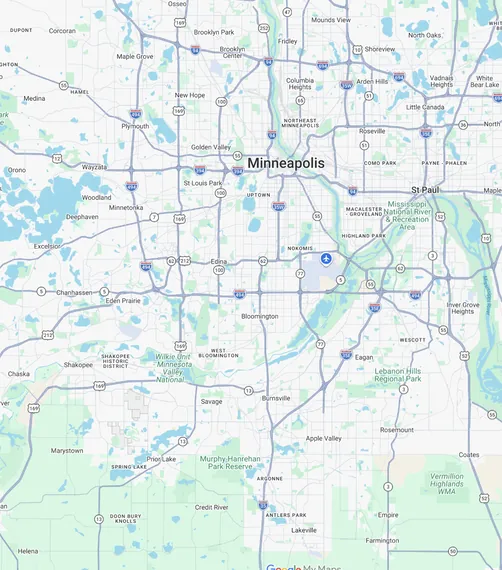
We Repair Ductless Systems Throughout the Twin Cities
Southside Heating & Air Conditioning serves Bloomington and the surrounding communities with expert mini-split repair and diagnostics. Whether you’re in a nearby suburb or further out in our service territory, our EPA-certified technicians arrive ready to diagnose your ductless system and get it running again.
Don’t See Your Location?
We serve communities across the Twin Cities metro — and even if your town isn’t listed, there’s a good chance we can help. Give us a call at 952-884-2453 or send us a message, and we’ll let you know right away if you’re in our service area.
Primary Service Cities
Additional Communities We Serve
- Minnetonka, MN
- Lakeville, MN
- Excelsior, MN
- St. Louis Park, MN
- Hopkins, MN
- Roseville, MN
- Eagan, MN
- Prior Lake, MN
- Plymouth, MN
- Rosemount, MN
- Savage, MN
- Farmington, MN
- Shakopee, MN
- Chanhassen, MN
- Maple Grove, MN
- Brooklyn Park, MN
- Brooklyn Center, MN
- Fridley, MN
- New Hope, MN
- Golden Valley, MN
- Chaska, MN
Get Your Mini-Split Back on Track
When your ductless mini-split stops working or loses efficiency, you need a contractor who understands the unique complexity of sealed refrigerant systems and inverter-driven compressors. Southside Heating & Air Conditioning brings EPA certification, NATE expertise, and three generations of experience to every repair. We’ll diagnose your system accurately, explain your options clearly, and execute the repair with precision. Our QI certification with Xcel Energy reflects our commitment to efficient, code-compliant work you can trust.
Mini-split repair shouldn’t leave you guessing or waiting for answers. Call us today to schedule a diagnostic visit, and we’ll get your system back to keeping your home comfortable. We’re available throughout the Twin Cities service area and ready to help. If a repair turns out to be more than your system is worth, we’ll walk you through payment options for a new installation, and every repaired system is welcome to join our maintenance plan for scheduled seasonal care going forward.